


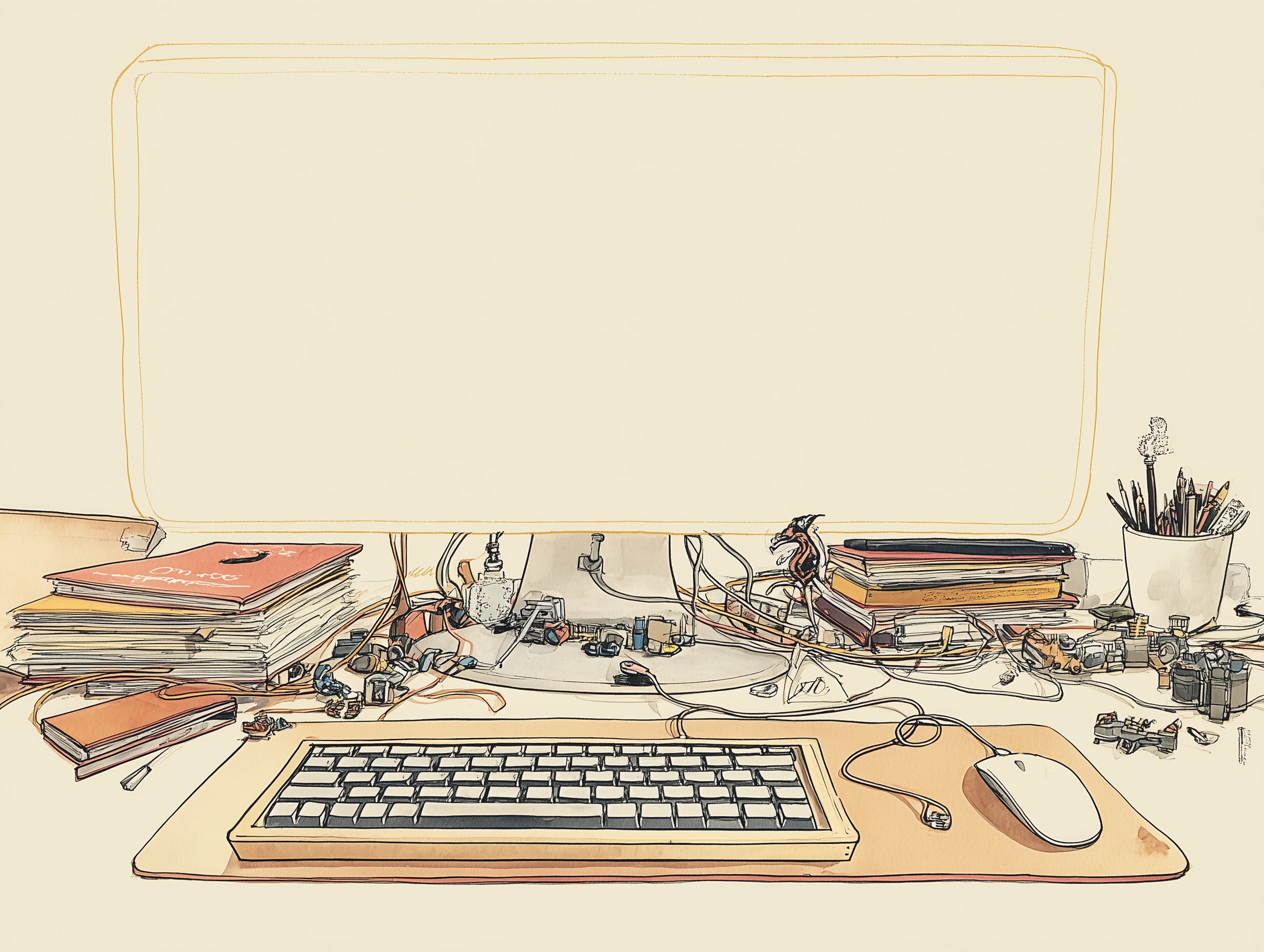
The desk is a crime scene of small distractions - a brass knucklebone darkened from restless handling, a balance toy I keep telling myself is a meditation practice and not a way to dodge email, a business card with one of those holographic squares that throws an oil-slick rainbow when the light hits it. I’ve been meaning to bin the card for a year and I don’t, because it’s shiny, and there’s a magpie somewhere in me that wants to take it back to the nest. I reach past all of it. My fingers find the plate - cool, glazed, heavier than it looks - and I lift it level with my face and turn it slowly in front of the webcam, slow enough that the light catches the gold lacquer running crooked across the lower third of it like a river seen from a plane.
On the other side of the glass: nine rectangles with names and faces floating in them. New major incident managers. The ones who’ll be woken at three in the morning while the rest of the company sleeps. I open my mouth and I give them the story.
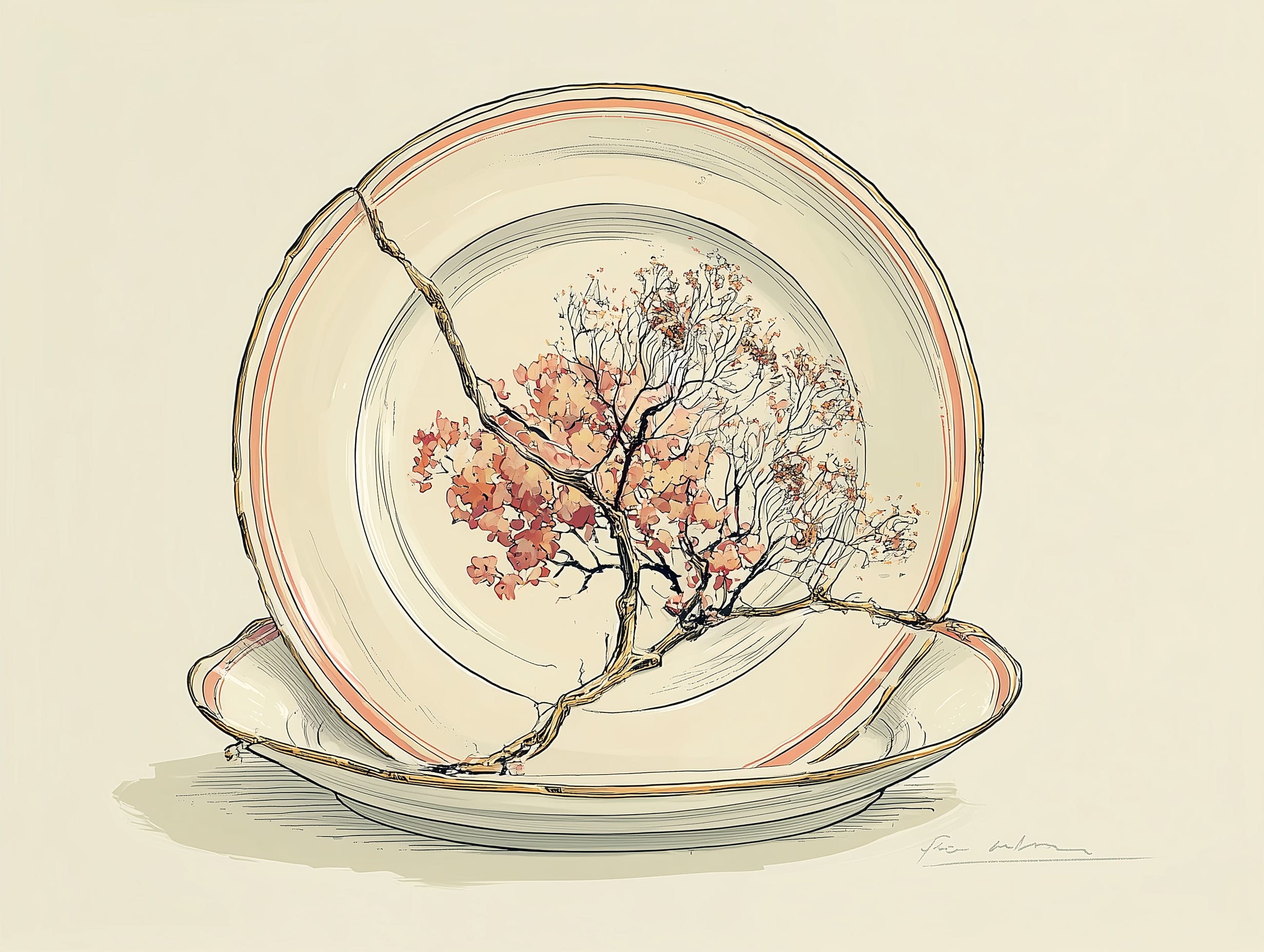
This is kintsugi, I tell them. This is a plate that was broken. This is a plate I repaired myself, by hand, with gold, slowly and on purpose. And this matters - this is like the work you’re about to do. Things are better for having been broken and lovingly put back together. The seam is the point. The seam is where the value lives. This is your calling, and you’ll answer it at the hours no one else will answer to.
We were supposed to be in Tasmania. We’d booked it months out - the year of the COVID, though nobody was calling it that yet, nobody knew the whole world was about to bolt its own doors from the inside. Then it did. And we were left with two weeks of leave and nowhere on earth to spend it, free as anything and sealed indoors, so we did what people do when the walls start talking: we found our hands things to do before the hands found their own.
One of those things was the plate.
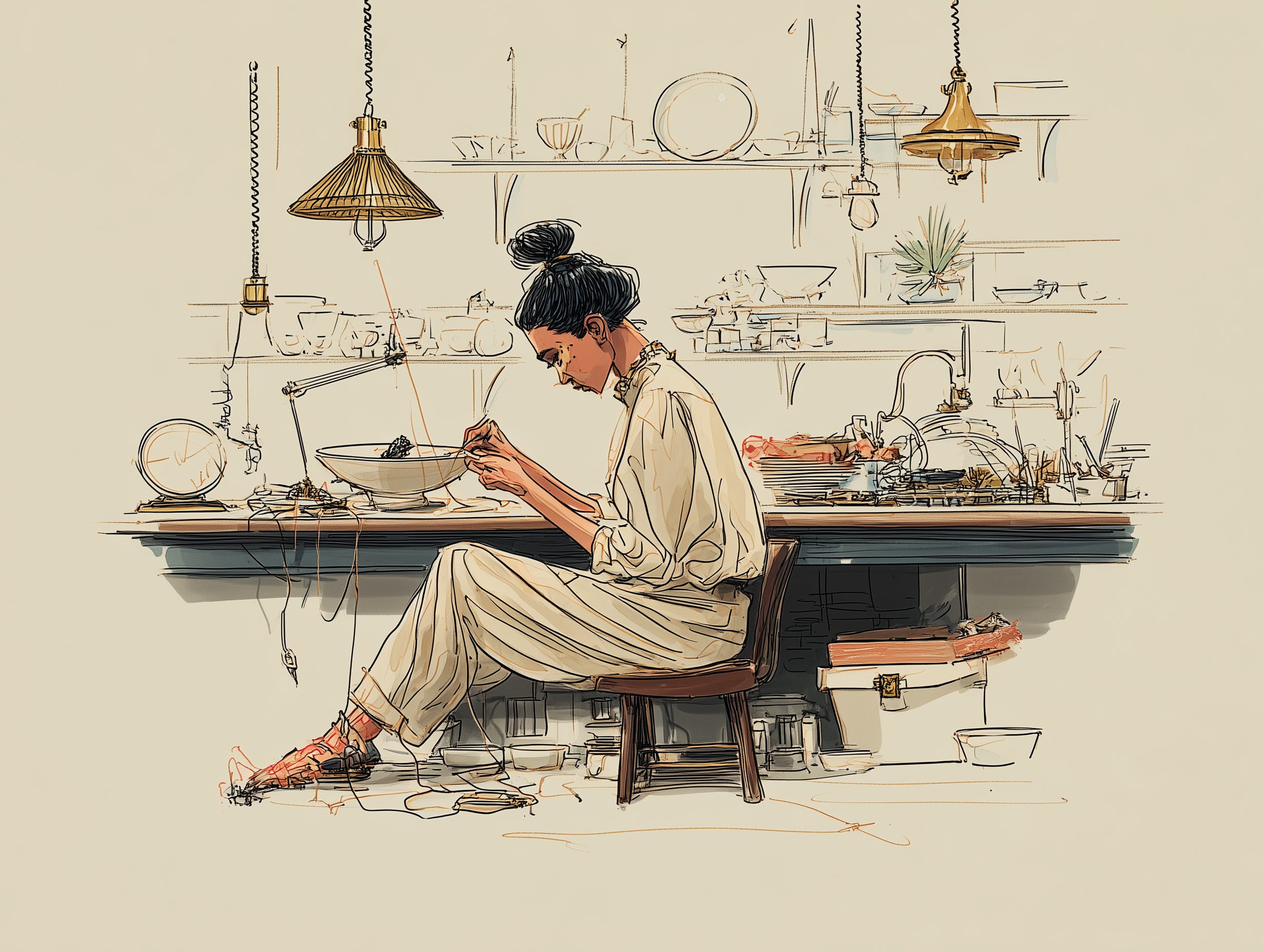
We were each handed one already broken - we didn’t get to break them ourselves, which was a disappointment I noticed at the time and am not ashamed of admitting. The breaking, it turned out, was the skilled part. You cannot drop a plate and expect the pieces to want to go back together; it has to be fractured by someone who knows how, in a way an amateur stands a chance of mending. So we sat cross-legged on the living-room floor, my wife and I, while a woman on a screen - calm, unhurried, the voice of someone who has glued a thousand things - walked us through how to make a broken thing unbroken.
It is not what the finished plate tells you it was.
The finished plate tells you about gold. The making is filing, and mixing, and holding two jagged edges together for longer than your fingers want to, and waiting, and painting a line you’ll immediately decide is crooked, and waiting again. It smells of the resin. It gets under your nails. You sit very still for a long time, which is its own particular hell, and then you stop and it sits very still for longer - days of nothing, the thing curing on a shelf while you orbit it and don’t touch it. For one small plate it was an enormous amount of effort, and I would not do it again for every dish my clumsiness has ever sent to an early grave. I’d sweep those up and bin them like anyone.
This one I kept.
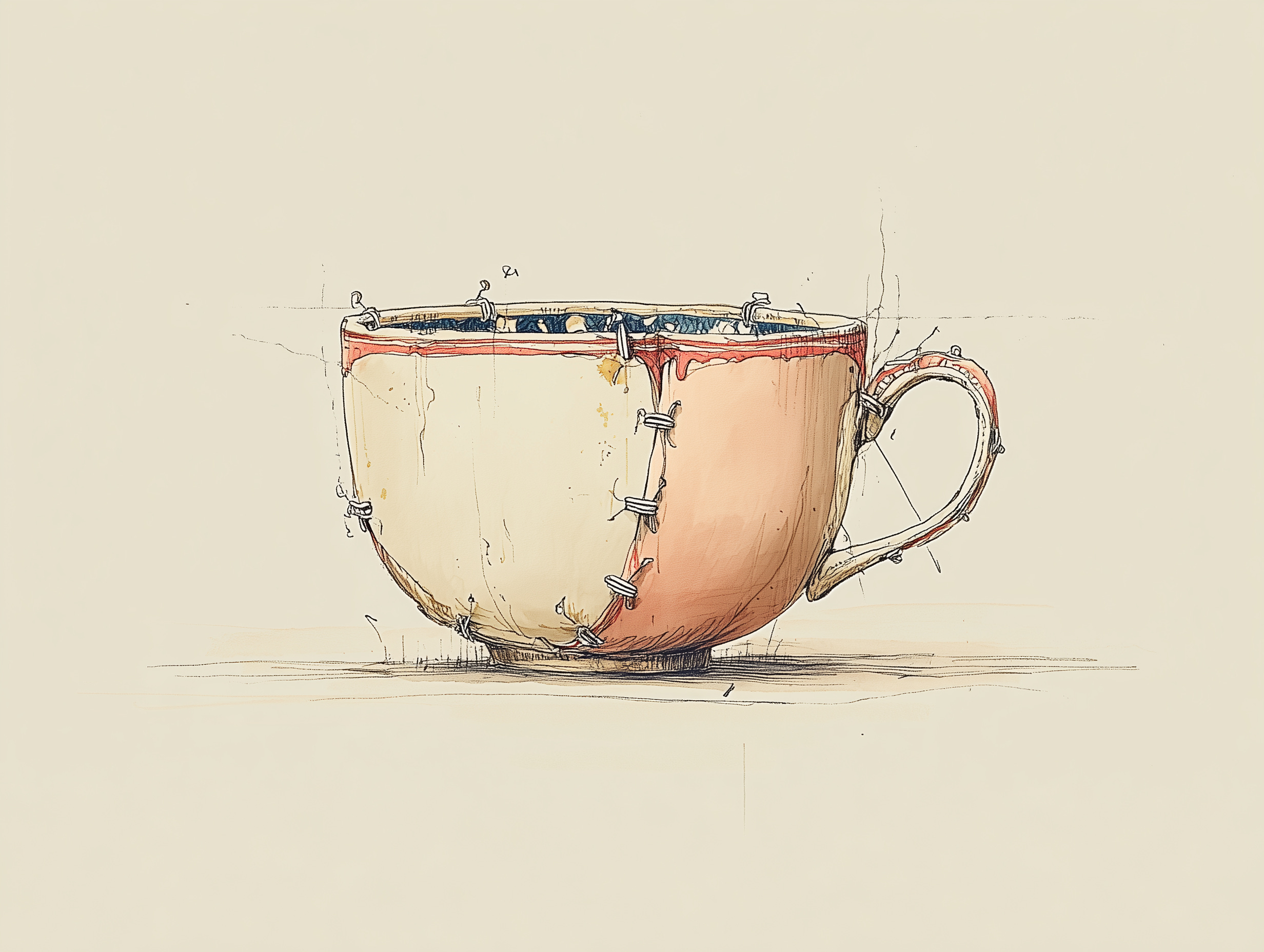
Here is the story, as close as anyone can get to it. A shogun broke a tea bowl he cared about and sent it to China to be mended. It came back held together with metal staples - crude little clamps, the kind you’d put on a split rake handle, biting across a thing made for tea ceremonies. He hated it. So he put it to his own craftsmen: find me a repair that doesn’t insult the thing it’s repairing.
What they came back with was gold.
And this is the part the version you usually hear quietly drops. Kintsugi was not invented to celebrate the break. It was invented because a cheap repair had dishonoured something that mattered, and the gold was the correction - not a party thrown for the fracture, but a refusal to pretend the fracture was nothing, or to paper over it on the cheap. The break was a loss. It stayed a loss. The gold didn’t undo it.
What the gold did was measure it.
Every slow step - the filing, the holding, the waiting I’d already done myself and called tedious - was the lament. You don’t spend weeks and a precious metal on something you’re indifferent to. The labour is the grief, and the grief is the proof. The seam isn’t where the value lives. The seam is the receipt. It tells you, in gold, exactly how much someone decided this was worth not losing.
I gave that talk to new cohorts. It was the reliable bit, the one that always landed - the plate, up to the light, the gold catching, things are better for having been broken and lovingly put back together. People wrote it down. They told it to others. They still do.
The real version doesn’t happen on a desk. It happens in a document, and the document changes shape depending on who’s reading it.
At the bottom, where the break actually happened, the seam is raw. The person who was on call writes down what they saw: the alert that had been muted for six weeks because it was noisy, the fix that sat in the backlog behind four quarters of roadmap, the thing everyone privately knew was load-bearing and fragile and shipped anyway. That’s the gold going in - honest, specific, unflattering, laid by the people who waded through the broken pieces at two in the morning.
Then the document goes up. And at every level it gets a little smoother. The muted alert becomes “a gap in observability.” The four quarters of deferred work becomes “competing priorities.” By the time it reaches the people with the most power to fix the systemic cause, it reads “a brief service degradation, since remediated” - sanded so flat there’s nothing left to grip. The crack is visible in inverse proportion to the power to do anything about it.
We say the right words about this. We espouse the blameless postmortem, the no-fault culture, the learning organisation. And it never quite takes, and the reason it never takes is not that anyone is stupid. It’s that the gold is paid for by one set of people and spent by another. The engineer who writes “we knew, and we shipped anyway” pays for that line in a currency the org doesn’t reimburse - exposure, the quiet mark against their name, the implication aimed upward at whoever set the priorities. The value of that honest seam - the learning, the trust, the thing that stops it happening again - is banked somewhere above them, by people who paid none of the cost of the admission.
That’s the whole problem, and “blameless” doesn’t touch it. Blameless is a policy. It doesn’t change who holds the brush. When the cost of an honest repair falls on the people least able to absorb it, and the benefit accrues to the people who never picked up the gold, you don’t get kintsugi. You get the cheapest thing that still photographs as whole.
An organisation will not spend gold on an outage, but you should see what it spends on paint. A customer could be forgiven for thinking it was a perfectly new plate. The dashboard turns green, the public post-mortem a sanitised paragraph, the whole experience a transient memory a month later when it disappears from the status page. The uncomfortable truth is that the smoothing works - the rough edges are gone, the seam colour-matched, the cracks now invisible. But the danger is in the smoothing. When the care is superficial, so is the mend, and the cracks return as inevitable as a fault finding its own line. The incident returns. Sometimes it is the symptoms. Sometimes it is the fault again. But it always comes back.
The returning crack is the smaller loss. The larger one is the map.
Problem management - the discipline, the actual job - is nothing more than reading the seams. You stand back from a thing that has broken in the same place a dozen times, and the gold tells you where it is weak, where it will go next, where to spend before it spends you. That only works if the seams are visible. Paint over every one of them and there is nothing left to read. Each incident, sanded and matched and filed, is fine on its own. It’s the loss of the record that’s fatal, because a bowl repainted enough times is no longer a bowl with a history. It’s a bowl that is mostly paint, holding a flawless surface and hiding, even from the people holding it, that it has no idea where it is about to fail.
And the part that should keep a reliability person awake more than any single outage is how good we are at this. The repaint is not neglect. It is not the lazy option. It is a disciplined, well-resourced, beautifully governed process - owners, templates, turnaround times - all of it pointed at making the break disappear on schedule. We are not bad at remembering our failures. We are excellent at forgetting them, and we have built the machinery to do it on time.
I know the move because I almost made it.
I stand here with the true story. And the easy thing, the obvious thing, was to simply keep telling the old one. To never stand in front of a room and admit that for years I had handed people the wrong thing, lovingly, and they had written it down. Sand it flat. Match the paint. No one would ever have known there had been a crack at all.
The desk is a crime scene of small distractions. I reach past all of it. My fingers find the plate - cool, glazed, heavier than it looks - and I lift it level with my face and turn it slowly in front of the webcam, slow enough that the light catches the gold lacquer.
I open my mouth to tell the story. But I stop - the story stuck in my throat. I can no longer say the words.
So I don’t say them. I turn the plate over instead - the seam, the gold, the line where it came apart and was brought back - and I look at it the way I should have been looking at it for years. It isn’t that breaking made it beautiful. It’s a receipt. It says, in gold, that someone once decided this was worth not losing, and paid for the decision by hand.
I set it back on the desk, in the light, where it stays.
I sit there and think about everything I’ve sanded flat and called resolved. The reports I closed clean. The cracks I matched so well I can no longer find them. I don’t say that to the waiting faces. I just leave the plate where the light can reach it, and let them wonder why I’ve stopped talking.