



It was a Tuesday, and I need you to understand what that means.
Monday you spend on your knees in the wreckage of the weekend, sorting whatever the change calendar detonated while everyone was at the beach. Tuesday is the day the building exhales. Night shift gone home. Handover done. Overnight outages tied off and filed. Tuesday, if nobody goes out of their way to break something, is very nearly civilised.
I was drinking the downstairs cafe’s interpretation of a latte. A thing I know and wish I didn’t: hazelnut syrup will completely hide an over-roasted bean. Caramel if the cup is merely bitter. Chocolate if it has gone past bitter into something with opinions. The syrup does not fix the coffee. It has never once fixed the coffee. It makes the failure drinkable - which is a different thing, and on a Tuesday morning a different thing is enough.
I was thinking about a second cup. That was the entire scope of my ambition at that hour - when the rightmost screens in the command centre turned red.
Then three more.
Then everything.
Turned.
Red.
The two other incident managers on shift turned to me with the expression of people who have just watched the floor leave, and said:
“What do we do?”
If you have never stood inside an IT command centre: picture a wall of screens. Tickets, dependency maps, dashboards only a particular kind of damaged person can read at a glance. Mostly green. The honest splash of yellow. Now flood the whole room red, wall to wall, until the light itself changes and every face in it goes the colour of a warning label.
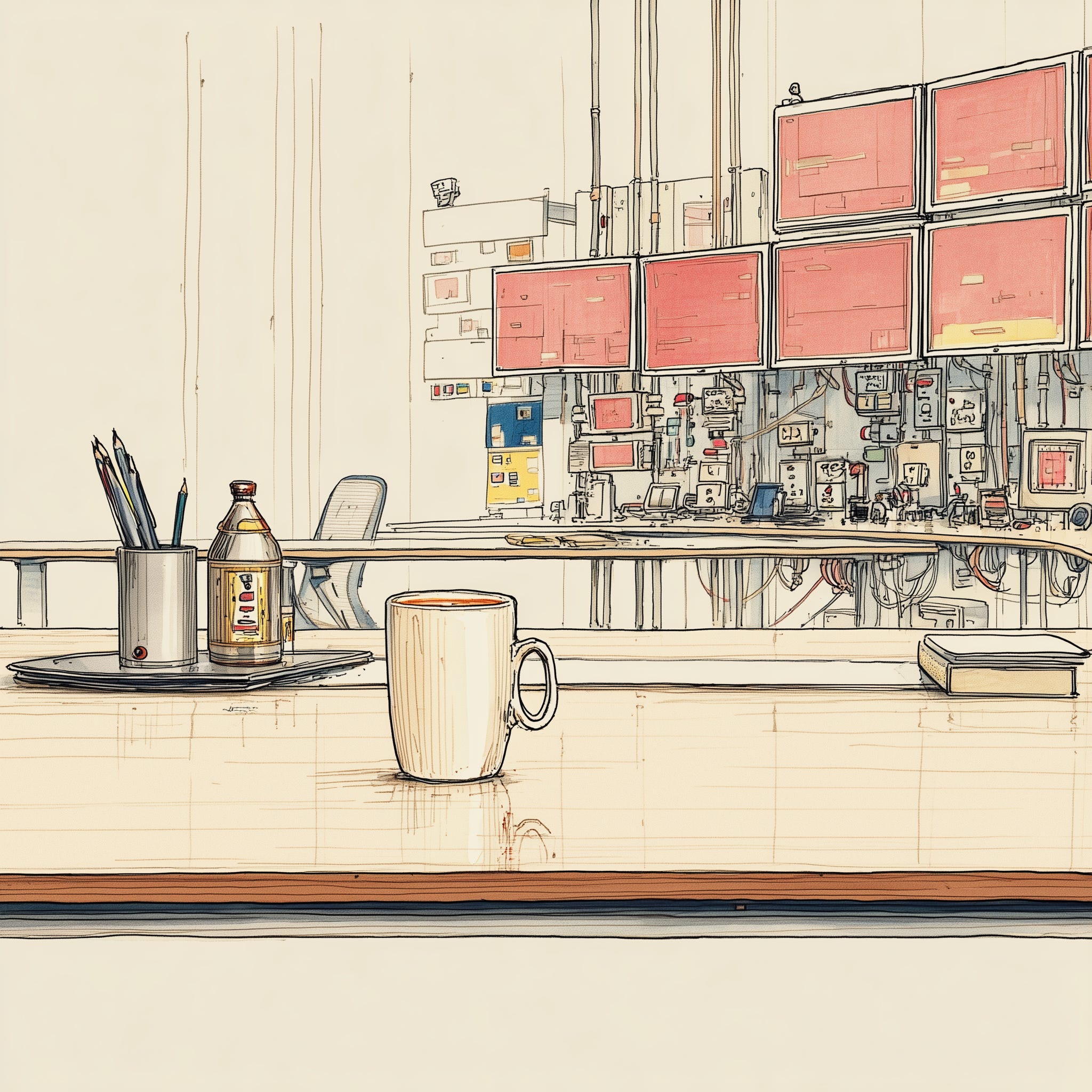
There is a fear that lives underneath thinking. Older than language, and it does not care how senior you are. It reaches the gut first and informs the brain afterward, as a courtesy. Competent adults stand in that red light and go briefly, genuinely stupid. If you keep a favoured deity on retainer, that is the moment to open negotiations.
I had two of those faces in front of me, and - honestly - I had the third. The same animal had me by the spine: the gut-drop, the white-out, the cold count of how many seconds before whatever I said next became the plan. What carried us was not nerve. I did not have nerve to spare. It was that we had built for this, and we had built it embarrassingly simple.
There is a law for this, and I believe it the way other people believe in things. Gall’s Law: every complex system that works got there by evolving from a simple system that worked. The ones built complex from the start do not work and cannot be repaired into working - you tear them down and begin again from something simple. So we had resisted the Great Defcon Playbook, the thick reassuring binder with a tab for every disaster a nervous mind can invent. We had three bridges. Platform. Applications. Front of house.
I pointed at the senior of the two.
“Platform bridge. I’ve got applications. Wide net - every oncall, all of them.”
I pointed at the other.
“Front of house. Every IM call diverts to you. Phone the team, find another IM, hand them the hotline. Then stand up an exec bridge.”
We scattered with our hearts going like fists on a door. Phones rang with news of escalating awfulness. Inside minutes the command centre was full - people on the line, people in the doorway, rooms filling with engineers wearing the fixed frown of someone typing very fast toward a moving target.
Three bridges. That was the entire apparatus. Now watch what grew out of it.
In our line of work, “fire” is almost always a figure of speech. Not that day.
Nobody had to be told what to do next, which was fortunate, because no document told them. Managers arriving for an ordinary Tuesday walked into the red light and brought leverage with them. Teams stood up breakout rooms of their own. Sub-groups peeled off to triage and reported back. Within the hour the three-bridge skeleton was carrying something it could never have specified in advance: a real map of what was down, where, and - finally - why every screen in the building had turned red inside the same ten seconds.
A fire had taken out the local telephone exchange.
That exchange carried the building’s data connection. The building was our headquarters. Our headquarters housed our primary data centre, because that was the style of the time. All the resilience engineering in the world will not save you from infrastructure you do not own and did not know you depended on. We were still running, and we were severed clean from the outside world - and from every regional centre in the country, all of them now wondering what had become of us. It was a small miracle the phones worked at all. None of us could read smoke signals, which is the only reason this is not a worse story.
An hour or two in, the connection came back. The provider had jury-rigged something out of copper and the building could speak to the world again. Have you ever felt elation as physical pressure in a room? A room cheering on the same half-second is a sound I can still produce on demand.
After that it was process. Reconnect in order. Green tick, green tick, green tick. By the time the sun gave up on the day, the machine was lurching back toward normal.
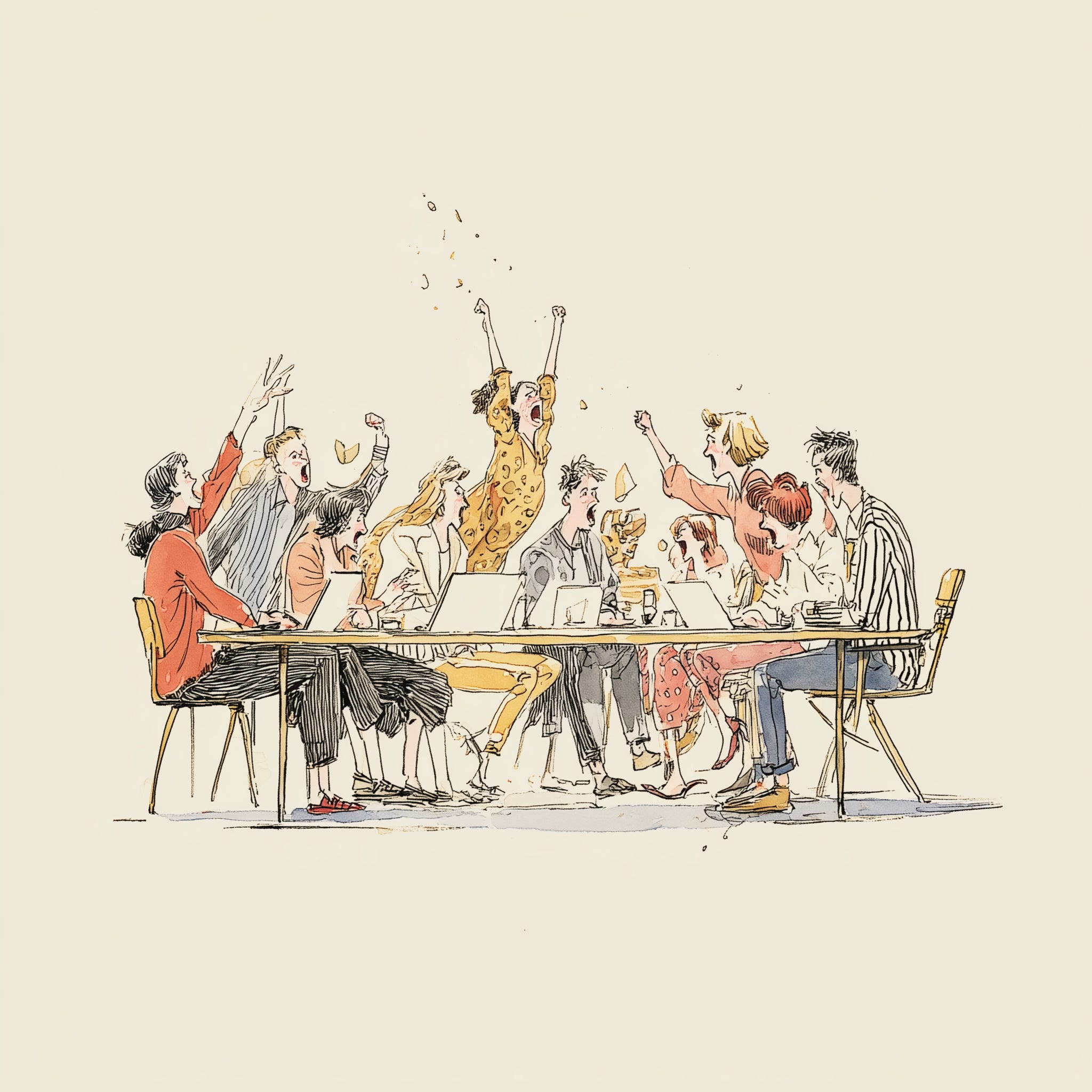
Stop on this for a second. The response that absorbed a regional telecoms failure - the managers, the breakout rooms, the sub-teams, the map - none of it existed at nine o’clock. Nobody designed it. It grew, inside an hour, out of three bridges and a wide net. That is not a lucky accident. That is the only way complexity that works has ever arrived anywhere.
I got the second coffee eventually. It was bad. I reached for the hazelnut without thinking, the way you reach for a handrail - and there is the confession, so let me make it plainly. I reach for the syrup. Everyone does. The syrup is seductive: it is right there, and it works, in the narrow sense that the cup goes down.
The Great Defcon Playbook is syrup. It is the most seductive document in our profession - thick, comprehensive, deeply reassuring - and it makes an organisation that has built nothing real feel prepared. It tastes exactly like readiness. Right up until a Tuesday arrives wearing a face the binder never tabbed, and the binder turns out to weigh a great deal and do nothing.
No playbook had a tab for “fire at the telephone exchange three streets over severs HQ from the entire country.” Yours doesn’t either. The specific shape of the bad day always outruns the imagination of whoever planned for it - and that is not a failure of planning. It is the nature of bad days. It is the whole reason you do not plan the day. You plant something small enough to grow into whatever the day becomes.
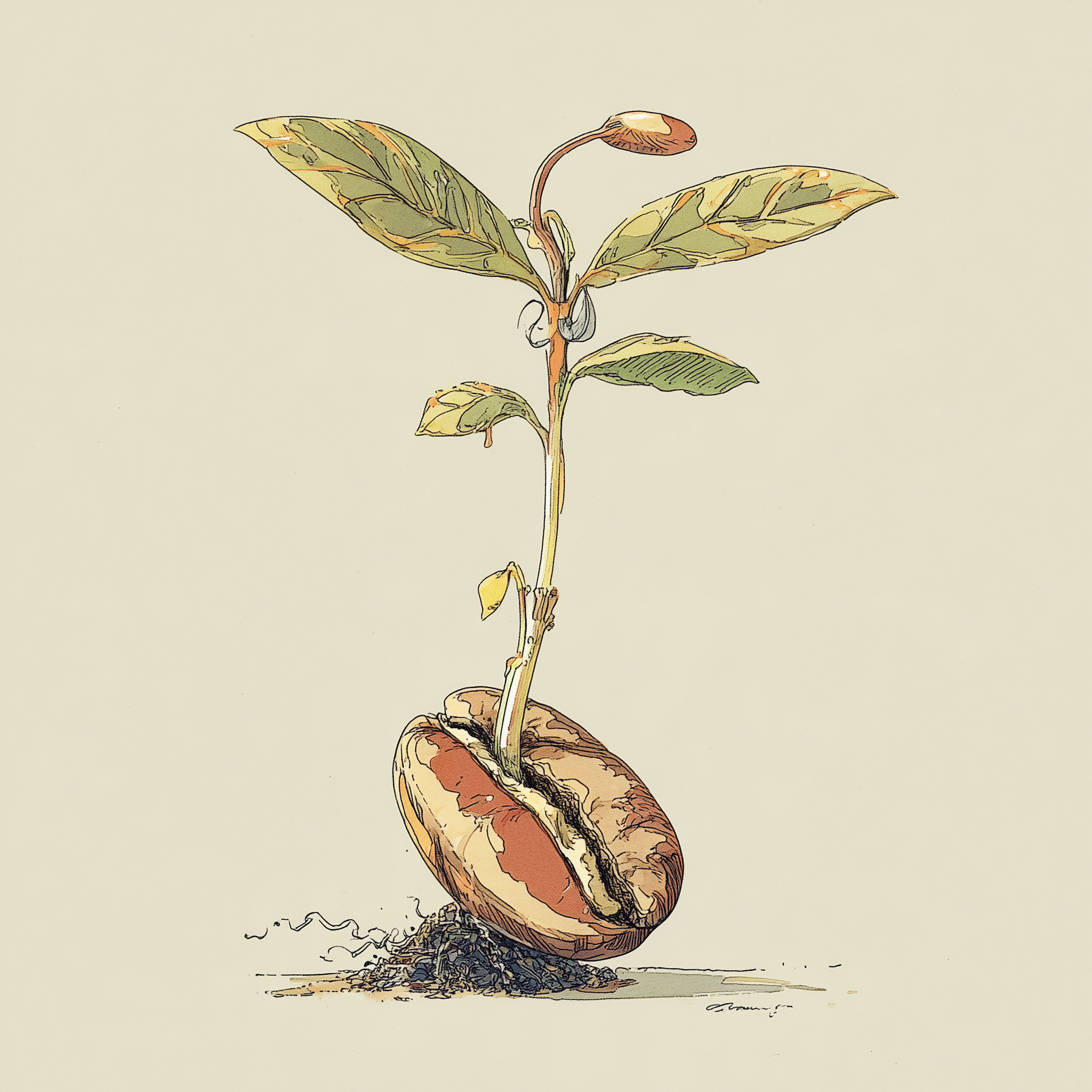
The three bridges were the bean - the real thing, the part the syrup can only ever imitate. Unglamorous. Almost too simple to respect. They anticipated nothing: not the fire, not the exchange, not the severed country. They anticipated nothing on purpose. They just gave several hundred frightened people a solid place to stand, and from that place a response grew that fit the disaster exactly - because it was built by the disaster, in real time.
Keep it simple. Keep it solid. Keep it small enough to trust on the worst morning of your worst day. Then let the right complexity find you - and it will, the second the room turns red.
The coffee will still be bad. You will still reach for the syrup; I am not going to pretend otherwise. Just never once mistake it for the thing holding you up.
[This article is a rewritten version of ‘Everything Turned Red’, originally published in February 2026]
What a cracking read! I didn't know whether to laugh or cry. You've captured the moment so vividly. I thank heavens I don't do your job. Screens would be permanently red...
my comment got lost or something...
I saaaid, I can't get enough of these illustrations. New York Times should be envious