


He was on a video call from a cafe, a product manager, flicking a begleri back and forth between sips of a flat white. I had a knucklebone going, switching it hand to hand while he talked. Two grown professionals, paid reasonable money to be taken seriously, fiddling with bits of string and weighted metal and picking over the companies that got it spectacularly wrong, as though hindsight were a kind of genius.
We agreed on nearly everything until we didn’t. He had built a tidy picture of the two of us and laid it out before me. He was the irresistible force, leaning on the engineers to ship, to get product to market before the market lost interest. I was the immovable object on the far side of them, the incident barrier, there to slow the whole thing down before somebody broke something that mattered. He meant it as a compliment.
I waited for him to finish and told him he had me exactly backwards.
The begleri stopped. He went quiet, the particular quiet of a man recalculating, and then he wrote something on the pad beside his coffee and asked me to explain myself. So I did. I told him I was not the brake. I had never been the brake. If it were up to me the engineers would be breaking more, not less.
The argument is not complicated, and I have made it often enough to make it fast. There are two ways to run a company that builds software. You change things quickly and break some of them, or you change things slowly and watch the market leave without you. There is no third lane. There is no measured middle where you ship at a sensible pace and nothing ever falls over. That lane is a fiction, sold to executives who find both of the real choices frightening. The companies that bought it are the ones who did not blow up. They sat very still, with a spotless record, and were buried holding it. The cleanest way to die in this business is to stop moving and call it discipline.
So if you have accepted that you have to keep moving, you have already accepted the incidents. They are not the price of getting it wrong. They are the price of doing anything at all. The team that ships nothing has none of them. The team that ships has them the way a road has potholes, and you can resurface as often as you like, but you do not get the road without the wear. Once you stop pretending the number can reach zero, the useful question changes. It stops being how do we have fewer, which has only bad answers, and becomes what do we get out of the ones we have. The answer turns out to be quite a lot.
The first thing you get is a team that tells you the truth early. When an incident is an ordinary event and not a permanent mark against your name, people put a hand up while the thing is still small and still cheap, instead of sitting on it and praying, which is what people do when the cost of admitting a fault is a hard conversation with someone who outranks them. Every catastrophe I have stood in the middle of had an earlier, smaller, survivable version that somebody decided not to mention.
The second thing you get is competence, which is only practice wearing a better word. A team that runs incidents often runs them well. They know where the runbooks are, or they know the runbooks are useless and route around them, and either way they have a rhythm. The team that has not seen an incident in eighteen months has not banked eighteen months of safety. It has banked eighteen months of rust, and it will move through its first real one like a fire drill in a building where nobody can remember which door is the exit.
The third thing is the one everyone says they want and almost nobody funds. If you run the incident well and tell the truth about it afterwards, you come out the far side knowing something about your system you did not know going in. John Allspaw calls an incident an unplanned investment, and he means it precisely. You did not choose to make it. You made it the moment the thing broke, and you do not even control its size. The only thing left in your hands is whether you collect the return, and most organisations pay the full cost of the outage and then throw away the receipt.
None of this works while an incident is a thing to be ashamed of. The shame is the whole problem. It is what keeps the hand down, lets the skill go soft, and turns the review afterwards into a hunt for someone to blame instead of something to learn. So I said it to him plainly. I did not want fewer incidents. I wanted a team that had them often, ran them well, learned from them properly, and felt nothing sharper than mild professional interest the entire time. A team like that is more reliable than a team that has only been lucky. And it is a great deal more reliable than a team that has merely been quiet.
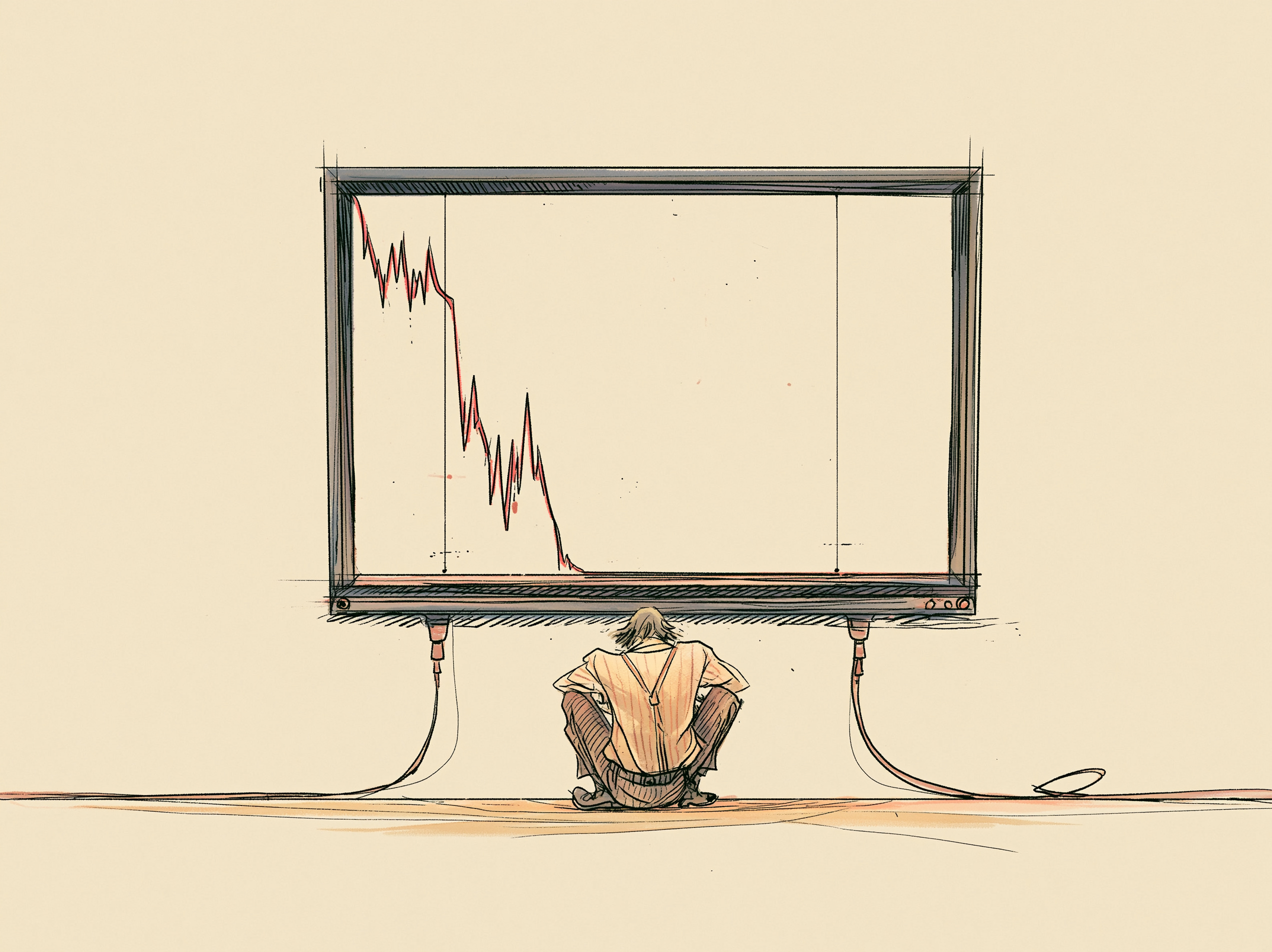
Here is the part that people accept in the abstract and resist in their bones. If incidents are the price of motion, their absence is not good news by default. A quiet quarter is not a trophy. It is a question, and it has more than one answer, and from the executive chair the answers are impossible to tell apart.
A team can go quiet for three reasons. The first is that it is healthy. The work is good, the luck is holding, and nothing has broken because, for the moment, nothing had to. This happens. It happens less than anyone wants to believe, and it never holds still, because a healthy team that stops shipping stops being one within a quarter or two. The other two reasons wear the first one’s clothes. They look identical on a graph, and they are both rotten.
The second reason is that the team is going soft, and there is no villain in this one, which is exactly what makes it hard to see. Nothing is being hidden. The incidents are not happening, the runbooks are quietly going out of date, and the one engineer who understood how the billing system fails at three in the morning has taken a job somewhere warmer, and nobody has noticed the gap because nothing has fallen into it yet. The capability does not announce its departure. It is simply not there on the day you reach for it. The rare large incident always comes, and when it does it lands on a team that has forgotten how to catch it. The quiet did not protect them. It disarmed them.
The third reason is the one a head of engineering described to me once, quietly, the way people tell you things they have decided not to fix. The incident culture in his department was poisonous. People who caused an incident, or were merely standing near one when it went off, were marked for it, and the mark travelled. It followed them into performance reviews and into rooms they were not in. So his engineers had made the rational choice. They had stopped raising incidents. They had stopped spending time running the ones they could not avoid. And the post-incident review, the thing that turns an outage into knowledge, did not come up at all. He told me this as a problem he was observing, not one he was causing, which is its own kind of tell.
It took me a moment to register what he had just listed for me. He had named, in order and without meaning to, the three things that make a team good at trouble, and he had explained that his department had switched off every one of them. No early warning. No practised hand. No learning. And the result of switching off all three, the figure sitting proudly at the top of his dashboard, was a low incident count. On paper, his was one of the calmer departments in the building. In truth it was one of the most dangerous, a place where everything that broke was either hidden or survived by luck, and where nobody was getting better at anything.
This is the problem with the number. Health, rot, and cover-up all produce the same low count, and from the executive chair they are indistinguishable. So when the figure drops, the room relaxes, which is the most dangerous thing a falling incident count can make a room do. A low number is not information. It is the absence of information, wearing the costume of good news. A clean record is not proof that you are safe. Sometimes it is only proof that you are lucky, and sometimes it is proof that someone is lying to you, and the graph will never tell you which. The head of engineering at least knew which quiet he was standing in. Most people reading the dashboard never find out, right up until the quarter that is not quiet at all.
Software has the good fortune that its quiet quarters usually end in a refund and an apology. Other industries run the same machine with the same blind spot, and when their quiet ends, it ends with bodies. The useful thing about those industries is that they investigate, at length and in public, so none of this has to be taken on faith. The reports exist. They are very long, and they all say a version of the same thing.

On the twentieth of April 2010, a group of BP and Transocean executives flew out to the Deepwater Horizon to hand the crew an award for seven years without a lost-time accident. They were on the bridge when the well blew out. The explosion and fire killed eleven people and put the largest oil spill in American history into the Gulf of Mexico. The record was real, and it was worthless, because it measured the wrong thing. Personal safety on the rig was excellent, the kind where the worst thing anyone pictures is a dropped pipe and a crushed foot. Process safety, the slow abstract business of whether the well itself would hold, was a disaster nobody was counting. The well needed twenty-one centralisers to seal correctly. They ran it with six. And the seven-year record was partly an illusion of its own, because the crews understood that raising a concern that delayed the drilling was a good way to lose your job, which means the number measured seven years without a reported problem, in a place where reporting one was punished. They were celebrating the silence at the exact moment it killed them.
NASA learned the same lesson twice, seventeen years apart, and wrote the textbook in between. In the years before the Challenger, the rubber O-rings that sealed the booster joints kept eroding in flight, and because the shuttle kept coming home anyway, the erosion stopped being treated as a fault and became a known quirk you could fly with. The night before the launch the engineers who built the boosters warned that the cold would stiffen the seals past the point where they could hold. They were overruled, after being asked to do the one thing engineering cannot do on demand: prove the rocket would fail before it had failed. On the twenty-eighth of January 1986 the seal failed and the Challenger came apart seventy-three seconds after lift-off, live on television, in front of the classrooms full of children who had been gathered to watch a schoolteacher fly into space. The sociologist Diane Vaughan gave the pattern its name afterwards. She called it the normalisation of deviance: the slow process by which a warning sign, repeated often enough without disaster, gets quietly reclassified as normal.
Then NASA did it again. Foam had been breaking off the external tank and striking the orbiter for years. The same foam, from the same ramp, had come away six times before, and because nothing had yet gone fatally wrong, the agency downgraded it from a flight-safety anomaly to a maintenance nuisance, a paperwork item, in the months before one more piece of it punched a hole in Columbia’s wing on the way up. The frequency of the warning had become the reason to ignore it. The engineers saw the strike on the launch film and asked to point a satellite at the wing to check the damage. The request was refused, on the grounds that it had not come through the proper channels. That hole went unexamined, and a fortnight later the orbiter disintegrated over Texas on re-entry, killing all seven aboard.
The investigation board concluded that NASA’s culture had killed the crew as surely as the foam, a remarkable thing to have to write about the same organisation a second time. But the parallel runs deeper than a repeated blind spot. Both times, the engineers who wanted to stop were made to prove it would fail, while the managers who wanted to fly were asked to prove nothing at all. That is what it means to learn the same lesson twice. Not a forgotten fact, but a burden of proof that sat, on both occasions, on exactly the wrong shoulder.
There is one industry that looked at the same raw material and drew the opposite conclusion, and it is the reason you can board a plane without thinking about it. Aviation decided, decades ago, that the near-miss was the most valuable thing it owned, and that the only way to get people to report the near-miss was to make reporting safe. The result is the Aviation Safety Reporting System: confidential, voluntary, explicitly non-punitive, with limited immunity for anyone who files. It was built on a single insight, that fear of punishment was suppressing the exact information that could prevent the next crash, so the system strips the reporter’s identity and shields them from enforcement, and in return it has gathered more than two million reports on things that nearly went wrong. The whole edifice runs on the principle that you want more incidents on the record, not fewer. And the neutral party chosen to run it, chosen precisely because it had no power to punish anyone, was NASA. The agency that twice mistook a quiet record for a safe one also operates the finest argument in the world for never doing that again.
The pattern is consistent enough to be a law. The organisations with the most spotless records are not the safest ones. They are very often the ones that have stopped looking, or stopped listening, or taught their people that looking and listening are career-limiting moves. A clean record is a fact about your reporting, not a fact about your safety, and the two come apart at the worst possible moment. So when you find yourself watching an incident count fall and feeling the room go warm with relief, it is worth knowing whose company you are in. You are standing on the deck of the Deepwater Horizon, on the evening of the twentieth of April, holding the award.

It is tempting to call the executives who chase zero foolish, but that lets them off too easily and gets the history wrong. The goal is not stupid. It is old. It is a piece of received wisdom from an era when it made perfect sense, kept alive by people who never noticed the ground underneath it had moved. To understand why the number lies, you have to go back to when it told the truth.
Reliability did not begin as a software idea. It began in hardware, in the discipline of working out how long a physical thing would run before it broke. The key number was the mean time between failures, and it was a number that meant something, because the thing it described was a component sitting still and wearing out at a knowable rate. A disk had a failure rate you could measure. So you stacked the disks into redundant arrays, the tall humming cabinets that filled the server rooms, and you did the arithmetic, and you could say with a straight face that the odds of losing everything at once were vanishingly small. The software on top of it moved at the same stately pace. It shipped in versions, on discs, in boxes, and between releases it sat as still as the hardware. Change was a rare and deliberate event, scheduled and rehearsed and dreaded. In a world like that, fewer failures was a coherent goal, because failure was a thing that wore out on a schedule, and you could engineer against a schedule.
Then the ground moved, and almost nobody changed the number. The discs and the boxes went away. Software stopped shipping in versions and started shipping continuously, a hundred or a thousand small changes a day, and the systems it ran on stopped being cabinets you could point at and became sprawling distributed things that no single person could hold in their head or draw on a whiteboard. The hardware problem, the one the old number was built for, was solved so completely by redundancy and the cloud that a failing disk became a non-event. But the failures did not stop. They changed shape. They stopped being a part wearing out and became something stranger, an emergent property of too many moving pieces interacting in a state nobody designed and nobody foresaw. You cannot calculate a mean time between failures for the sentence the system has never executed before. There is no schedule for a surprise.
What survived all this was the goal. We are still chasing the number that belonged to the cabinets, still treating a low incident count as the mark of a healthy system, in an environment where the thing that number measured no longer exists. Zero incidents is not an ambition. It is a fossil, perfectly shaped for a world that has been gone for twenty years. Chasing it now is not discipline. It is taxidermy. You are keeping a dead thing in a lifelike pose and asking it to guard the house.
And the inheritance is not harmless, because the world it came from is the one place the strategy worked. When failure was rare and predictable, you could afford to know nothing about it. You could keep your people innocent of how the system broke, because it broke seldom and it broke in familiar ways. None of that holds now. Chase zero in a system that fails by surprise and you do not get a safe organisation, you get an ignorant one, fluent in nothing, practised at nothing, blind to the shapes its own failures take. And the large incident is still coming, because it always is, only now it arrives in a form no one has seen, at a team that has never run one, inside a system no one can reason about under pressure. The pursuit of zero does not protect you from that day. It is the thing that sends you into it unarmed.
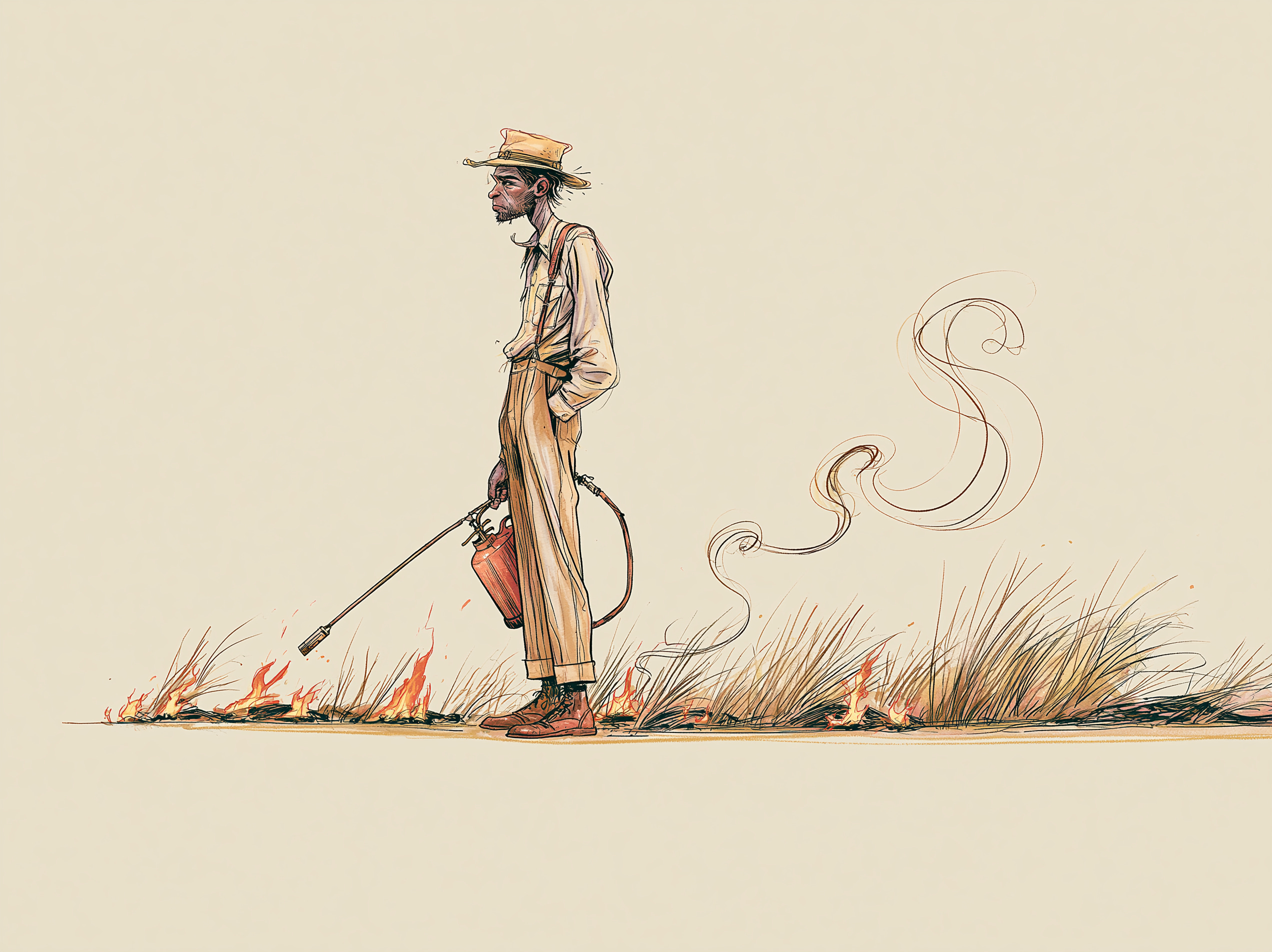
So you stop counting and start training. If incidents are the only honest signal you get about how your system fails, the work is not to silence the signal, it is to get fluent in it. You make it safe to raise one, so the small ones surface while they are still small. You run them often enough that the team moves through one the way a good crew moves through a storm, without drama, because they have done it before. You take the post-incident review seriously, as the place where the expensive lesson gets collected instead of binned. And when the system has been quiet for too long, you do not relax. You go and break it yourself, on a Tuesday afternoon, with everyone watching: a drill, a game day, a failure you injected on purpose so you could meet it on your terms instead of its own. The teams that do this are not reckless. They are the least surprised people in the building.
This is a different definition of reliability than the one on the dashboard, and it is the true one. Reliability was never the absence of failure. A system that has not failed is not reliable, it is untested, and the two feel identical right up until the day they do not. Reliability is what a system and the people around it do when failure arrives, which it will, on a long enough timeline, no matter how clever anyone was at the start. The reliable team is not the one that nothing happens to. It is the one that has made itself hard to surprise and quick to recover, that treats every incident as a rehearsal for the next, and that has therefore turned the thing everyone else is afraid of into the thing it is quietly best at.
The product manager wanted me to be the immovable object, the thing planted in front of the engineers so they could not break anything. I understand the appeal. It is a tidy picture, and it turns the incident person into a kind of guardian. But the immovable object is the thing this whole essay has been about burying. It is the company that sat still with a spotless record. It is the rig with the award. It is the agency holding the textbook it had already written about itself. The object that refuses to move does not prevent the disaster. It waits for it.
There is a name on this masthead, and it has been the joke the whole time. Zero sev zero. No incidents, and none of the worst kind, the clean and total silence that every executive has been trained to pray for. I did not call it that because I want it. I called it that because it is the most dangerous condition a system can be in, and almost no one recognises it while they are standing in it. A zero on that line does not tell you that you are safe. It tells you that you are healthy, or that you are rotting, or that someone has stopped telling you the truth, and the graph will not say which, and the day you find out which is not a day you get to choose. So I will leave it where I left it with him, the begleri turning in his fingers and the knucklebone going hand to hand across mine. I do not want fewer incidents. I want more of them, smaller and louder and sooner, run by people who are not afraid of them.
That is not the absence of trouble. It is the only kind of safety that was ever real.