

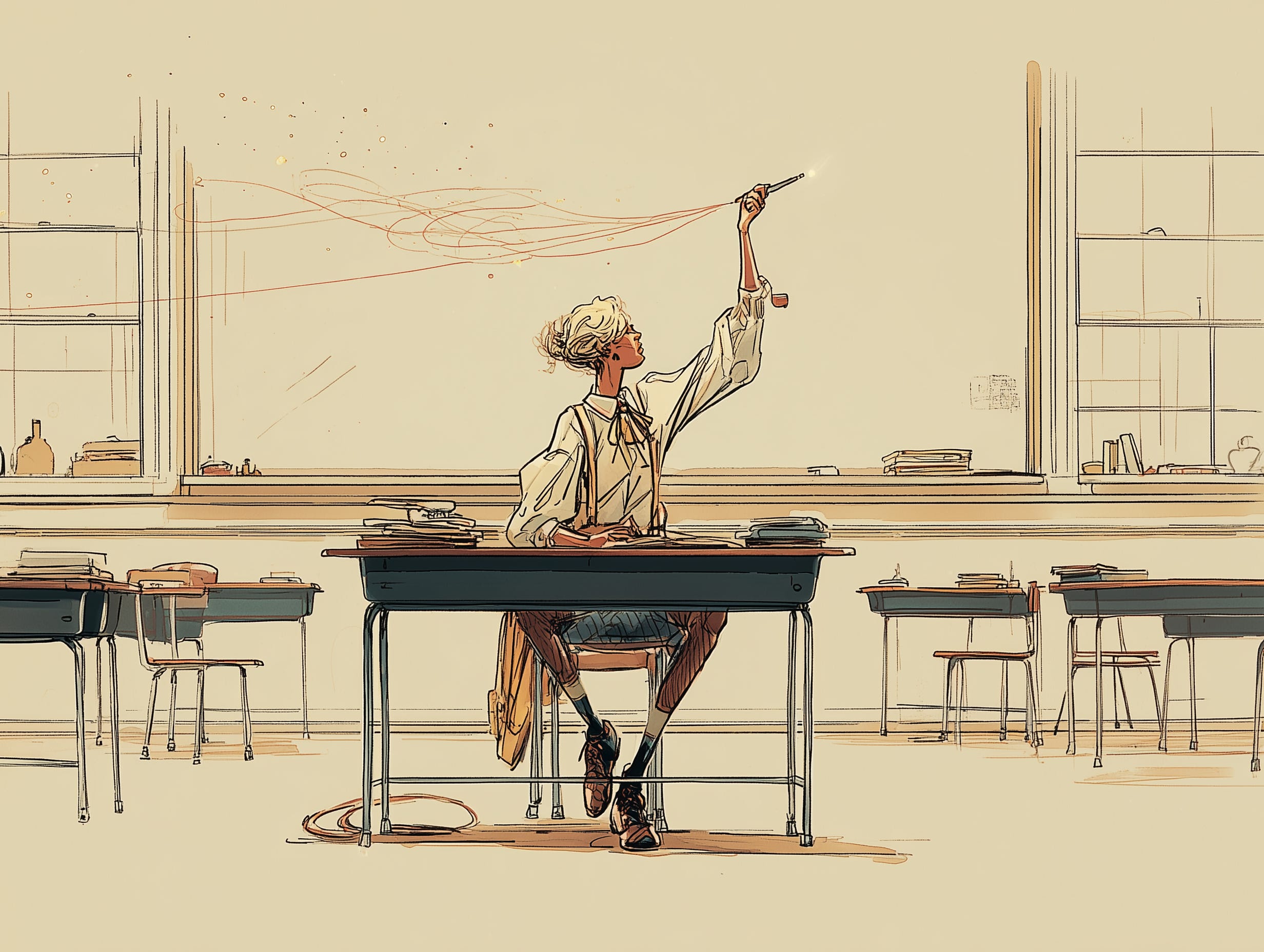
The instruction was simple. Hands flat on the desk. Eyes forward. Pay attention.
At some point in the history of Western education, someone decided that the ideal learning posture was that of a person waiting to be executed. Upright. Still.
The first thing they take is the movement. Before they take your confidence, before they take your grades, before they install the particular brand of shame that follows a restless child into adulthood like a bad debt - they take the movement. The stance of compliance, dressed up as the posture of learning.
And so, rebellion. The pen went first. Confiscated, second week of term, on the grounds that the clicking was disruptive. Then the eraser - or what was left of it. Apparently the small debris field on the desk constituted some kind of offence. The smart ones learned to doodle under the pretense of taking notes. If you could pretend to be still enough, you could get by.
Here is what they do not teach you in school, possibly because it would undermine the entire architecture of the place: your brain runs on dopamine the way a city runs on electricity, and when the supply is irregular - when the system is wired differently from the start, which is the case for a significant percentage of the population - the lights flicker. The executive function dims. The prefrontal cortex, that smug little governor of attention and impulse, starts to go offline.
As it turns out, the restless ones were right.
Here is what the science has established, at considerable expense and over several decades of peer-reviewed effort:
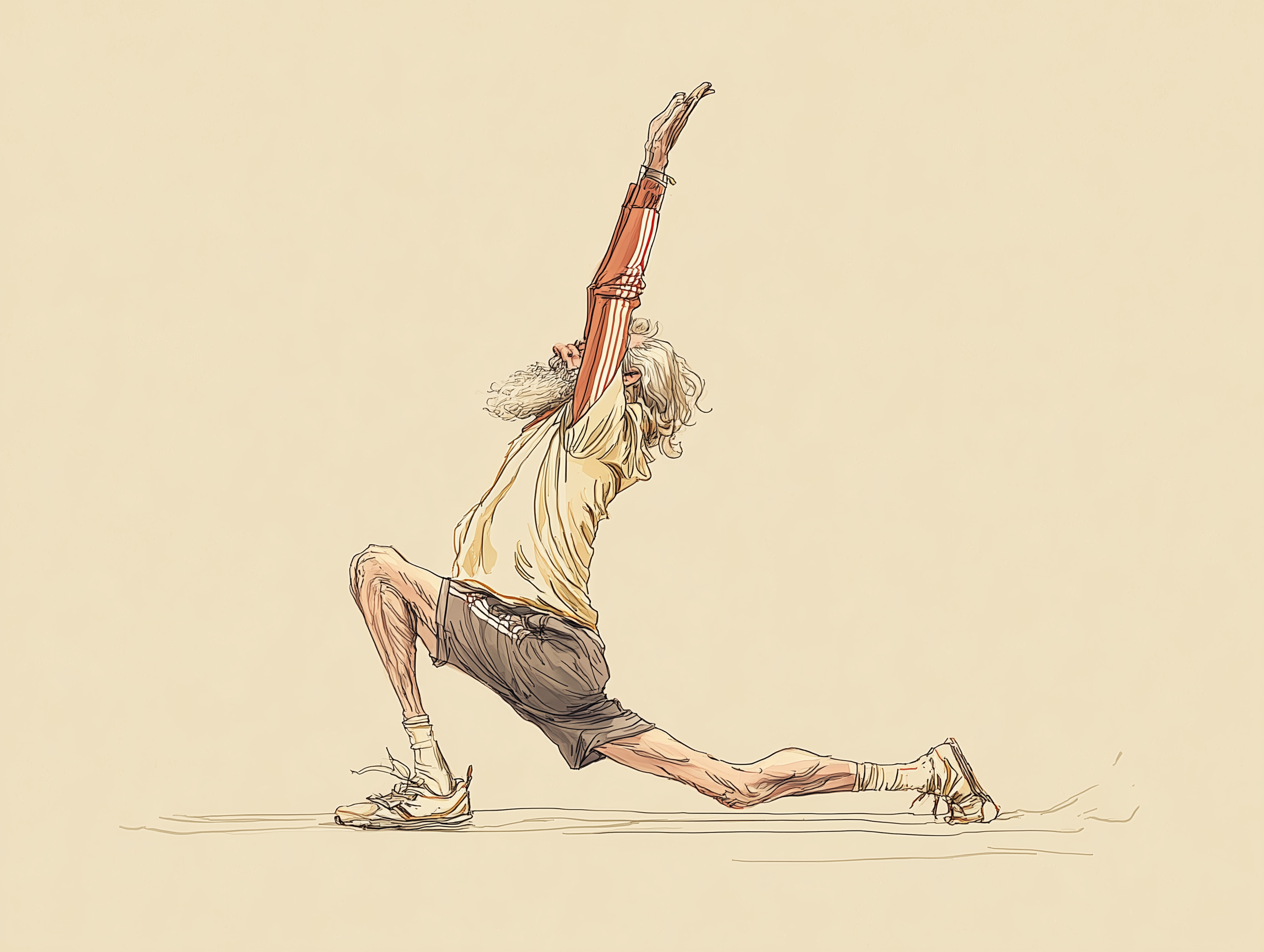
The brain is not separate from the body. Mental functions cannot be understood without reference to the physical body and the environment. Movement - deliberate, rhythmic, embodied movement - changes brain structure. It preserves grey matter. It strengthens neural connectivity in regions governing attention, emotion, and executive function. It means your body can start regulating itself before your brain has decided to. No thinking necessary.
Yoga practitioners. Tai chi practitioners. Qigong. The Feldenkrais Method. Conscious dance. All of them producing measurable neurological change in people who practice them.
The field has a name. Movement-based Embodied Contemplative Practices - MECPs, per a 2014 paper in Frontiers in Human Neuroscience by Schmalzl, Crane-Godreau and Payne that is worth reading if you want the full architecture.
The concept is older than the acronym by several thousand years.
Somewhere in a UC Davis laboratory, a researcher named Julie Schweitzer has spent years proving something that should have been obvious to anyone who ever watched a kid get their pen confiscated. Children and adults with ADHD, she found, performed better on cognitive tasks when they fidgeted. Not slightly better. Measurably, consistently better. The movement wasn't despite the focus. It was how the focus was happening.
For neurodivergent brains in particular - ADHD, autism spectrum, sensory processing differences - this isn't optional. It's the mechanism.
You see, the prefrontal cortex - your brain's executive function hub, the part responsible for planning, working memory, and sustained attention - runs on dopamine. This is not controversial. What is slightly more interesting is that physical movement, including something as small and apparently pointless as rolling a pen between your fingers, triggers dopamine and norepinephrine release through a mechanism that lands in roughly the same neurochemical neighbourhood as what Ritalin does. Nobody puts this on the label of fidget toys. They probably should.
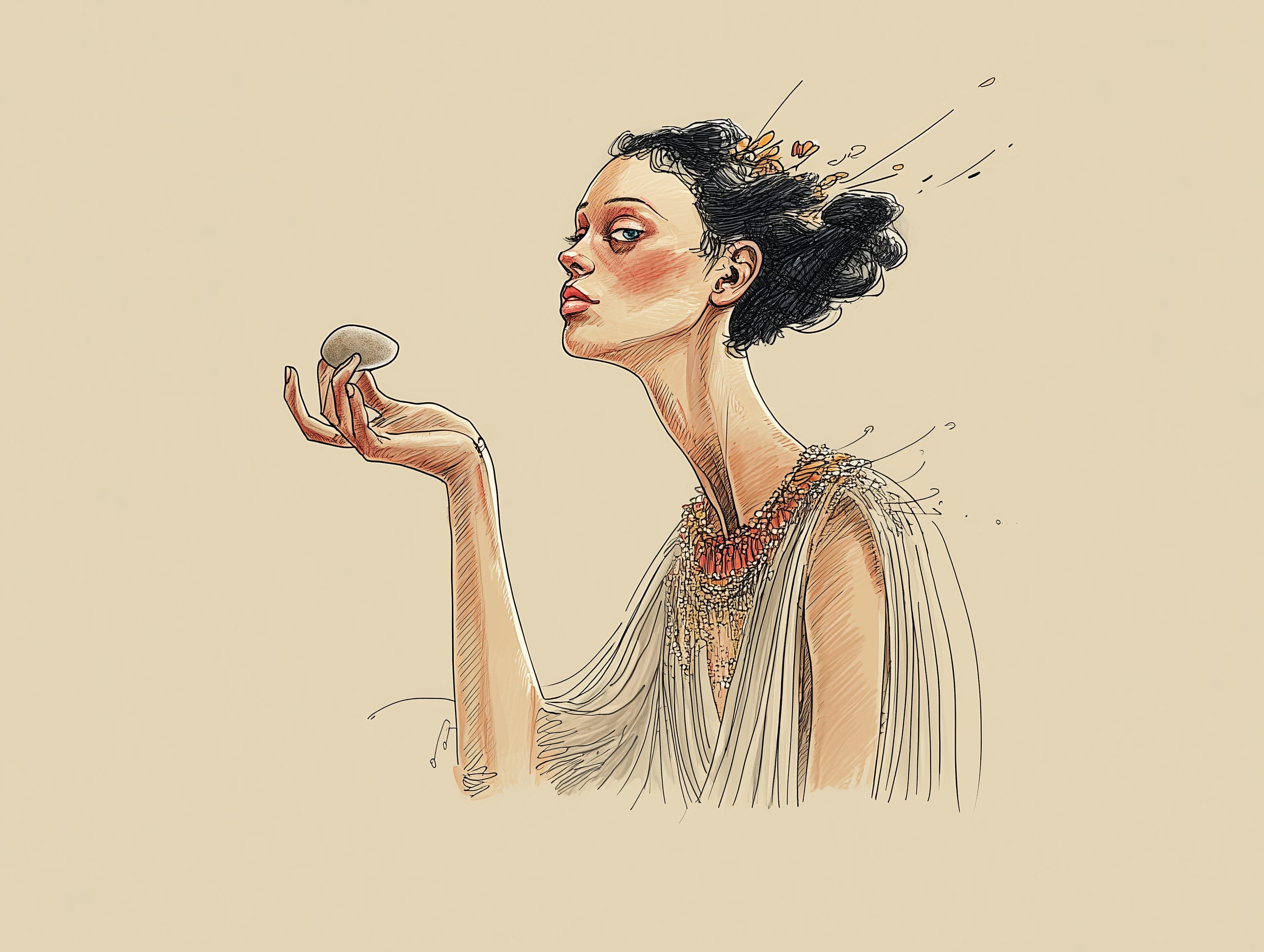
Before the prayer bead, before the rosary, before any of the formalised liturgical hardware that organised religion eventually wrapped around this impulse - there was a stone. Just a stone. Smooth, because a river had been working on it for longer than any human civilisation has existed. Picked up, held, rubbed with the thumb until the thumb knew every contour.
Archaeologists have found them in ancient Greek burial sites, worn smooth in a way that only years of daily handling produces. The Greeks were pulling them from the sea specifically for this purpose as far back as 1000 BCE.
At some point - and the exact point is disputed, obscured by the usual fog of religious history - somebody had the idea of putting the stones on a string. This was, in retrospect, a significant upgrade. A single stone is a comfort. A string of them is a system. You can count on a string.
Monks on Mount Athos in the medieval period were tying knots in cords to count prayers - the komboskini, prayer rope, functional and austere. Then it escaped the monastery, as useful technologies tend to do, and found its way into the cafes and street corners of Greek life, where it shed the prayers but kept the rhythm.
By the twentieth century the komboloi was everywhere. Prime ministers had them. Shipping magnates had them. The old men in kafeneions clicking their beads in the shade of the plane trees had them. The rhythm of the beads had become a kind of ambient music of Greek culture - fast clicking signalling agitation, slow rolling signalling ease, the hands encoding mood in sound the way a jazz musician encodes feeling in tempo.
And then there was the begleri. The stripped-back version. No closed loop, no tassel, no elaborate bead count - just a short cord with weighted ends, open-stranded, designed for tricks and manipulation rather than counting. Simpler, more versatile, easier to carry in the slim pockets of blue jeans. The begleri became associated with the mangas - the Greek urban countercultural type, linked to the working class port districts, to rebetiko music, to a particular brand of cool that had no interest in respectability. They would swing the beads with theatrical confidence, clacking them together in ways that attracted attention, that demonstrated skill, that said: I have nowhere to be and I know exactly what I’m doing.
The object that started as a monk’s prayer tool had become a prop for the Greek equivalent of James Dean.
In 1967, the Greek military junta banned begleri with long cords. A dictatorship, with tanks and all the apparatus of authoritarian control, found time to legislate the dimensions of a hand toy. The practice survived. The cord got shorter.
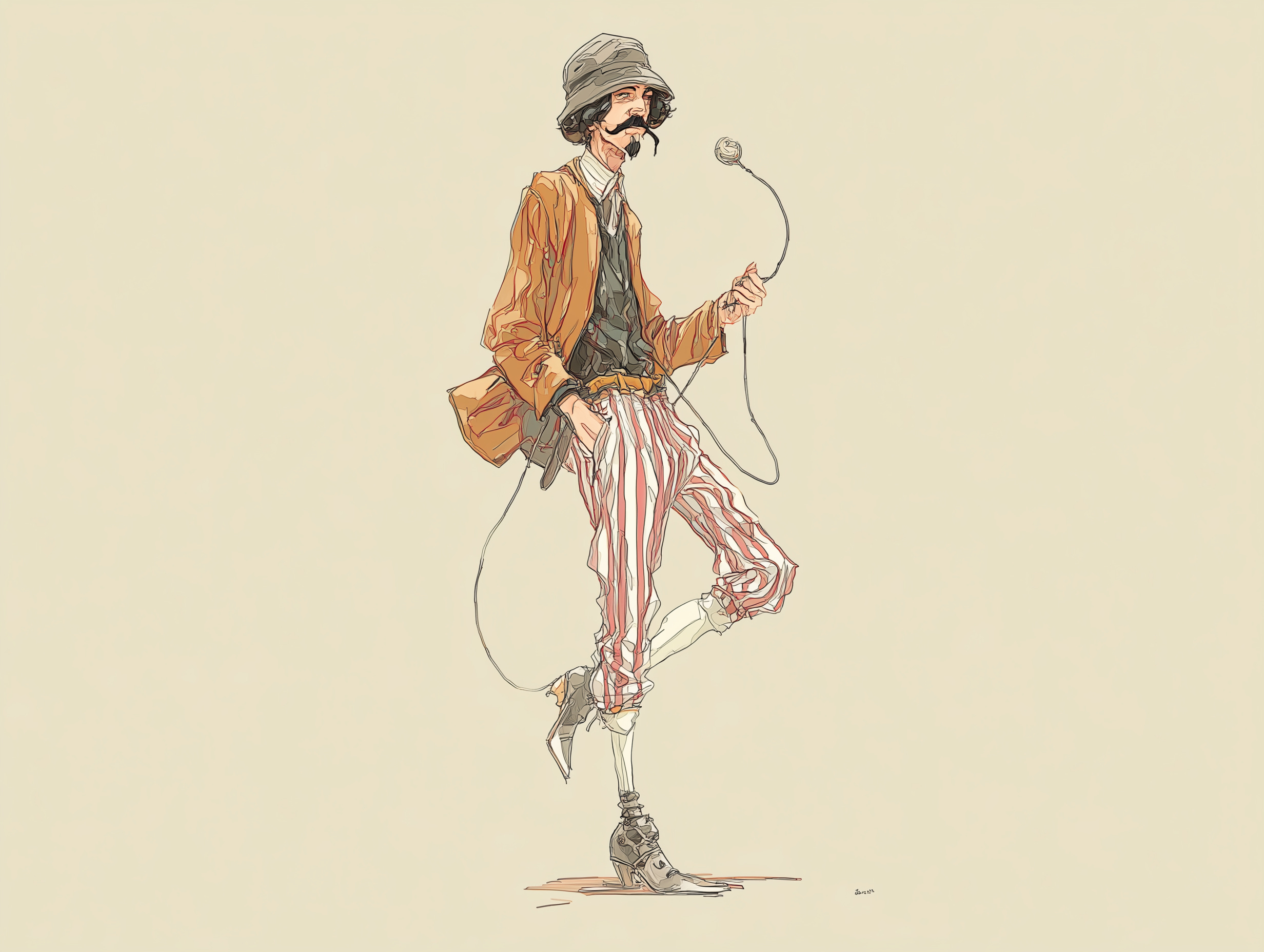
The timeline of this technology runs roughly as follows: Smooth stone pulled from a river, ancient Greece, approximately 1000 BCE. Knotted prayer cord, Mount Athos monastery, medieval period. Komboloi, nineteenth century. Begleri, Greek urban working class, late nineteenth century onwards. Begleri with long cords banned by military dictatorship, 1967. Begleri unbanned, junta collapses, 1974. While the fidget spinner circa 2017 gained peak absurdity and was largely forgotten within eighteen months, a small machined object from Canada had already quietly arrived two years earlier. The Knucklebone. 2016. Still in production. Still in pockets.
What this timeline is the history of is not toys. It is not stress relief products. It is not the wellness industry finding new ways to monetise anxiety. It is the human nervous system, across three thousand years of recorded history, refusing to accept that the hands have nothing useful to do.
Every civilisation that ever tried to sit still and think eventually put something in its hands. The only thing that has changed is the material.
The timeline does not tell you which of these things actually worked.
There is a test for this. Simple, brutal, takes about thirty seconds. Put the thing in your hand during a task that requires genuine concentration. After five minutes, ask yourself: where was my attention? If the answer is anywhere near the object in your hand, you have a toy. If the object has faded into the background of sensation - present, grounding, doing its quiet work below the waterline of conscious thought - you have a tool.
Most of what got sold in the great fidget panic of 2017 fails this test immediately. The spinner fails it. The cube with its sixteen satisfying interactions fails it. They were designed to be noticed, to be played with, to be the thing you were doing - because that is what sells, and the alternative, a small unremarkable object that works precisely because it refuses to be interesting, does not photograph well and cannot be unboxed on YouTube.
The worry stone does not have a YouTube channel. It has been in continuous production for three thousand years.
The first thing you notice about the knucklebone is the weight. Not heavy, exactly, but present - the particular density of machined metal that communicates craftsmanship without announcing it. You roll it once between the fingers and something settles, somewhere in the background of the nervous system, in the way that a good pen or a well-worn stone settles. The hands have found something that fits.
It is approximately the size of a small spool, with rounded end-knobs and a central grip that sits naturally in the pinch of thumb and forefinger. It was designed by a Canadian schoolkid in 1989 who was tired of getting in trouble for doing yo-yo tricks in class. He was, in other words, exactly the kind of kid this article is about. He built it from polymer clay, then forgot it in a box for twenty-seven years before the world was ready for it in 2016.
It was a solution looking for a problem that already existed. The problem being this: how to give a restless mind somewhere to put itself without disturbing everyone around you.

Here is what the classroom never told you: the fidgeting was correct. The tapping, the rolling, the increasingly elaborate doodles in the margins of notebooks that were supposed to contain something else - all of it, correct. The nervous system doing what nervous systems do when they need to think and are not being allowed to move: finding something, anything, to keep the hands occupied while the mind gets on with it.
The monks on Mount Athos knew this. The Greek mangas knew this. The schoolkid in Victoria Canada with the polymer clay knew this.
The teacher who took the pen did not know this. That is not your problem anymore.
AroundSquare make the knucklebone and several other objects worth putting in your hands. They did not sponsor this article, endorse it, or receive advance notice of its existence. This is not an advertisement. It is a recommendation, which is a different thing entirely, and the difference matters. aroundsquare.com
I agree - a quick and effective marketing win for fidget toys