

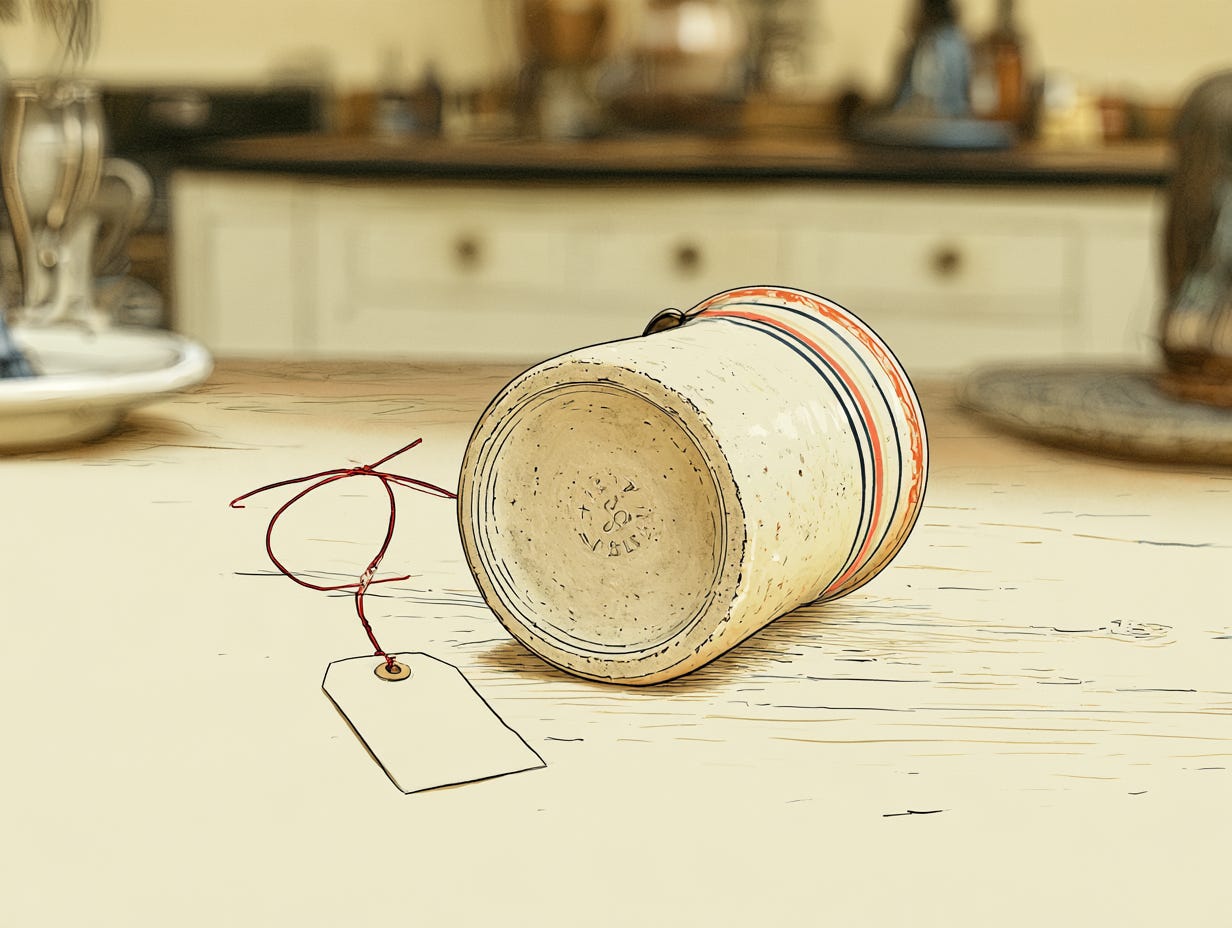
It arrives at the kitchen table, mostly. Someone has eaten the bread, or turned the mug over to look at the base, or sat through the whole track without checking their phone, and then they say it. You should sell these. It is said warmly, by people who love you, which is why it works. There are variants. You could do this full time. Why aren’t you famous. Have you thought about Etsy. My cousin does the markets.
Nobody who has said it to me has ever asked how much. That is the sentence’s design. It puts a price on the thing and declines to pay it, in the same breath, and leaves you holding the valuation. What it means is that someone should. What it also means is: not me.
The refusers know this. They are the ones who answer that it is just for them, and get told they are wasting it. I have never been one of them. I took the sentence at its word, and what follows is the invoice.
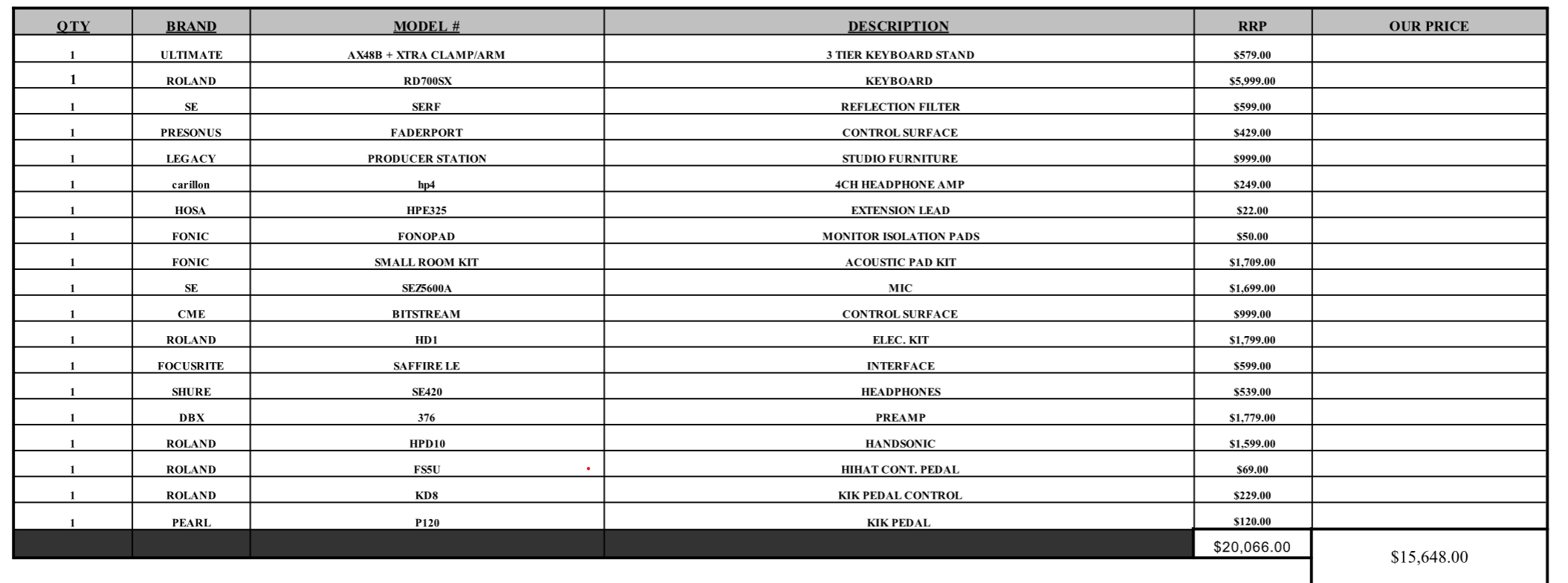
This is a quote from 2009. Nineteen lines, quantity one each. RRP twenty thousand and sixty-six dollars; our price fifteen thousand six hundred and forty-eight. The bank lent it to me. Line five is the desk, and the desk is still there.
Added since: a Zendrum, 2010. A chromatic electric dulcimer, built to order by a luthier. A pair of Avantone mixcubes, 2018, nearly pristine, on stands on the desk. Merchandise, bought to sell. On the drives, a few terabytes of soundbanks and plugins, bought across two decades at full price and in sales, instruments ordinary and strange and the tools to make them sparkle.
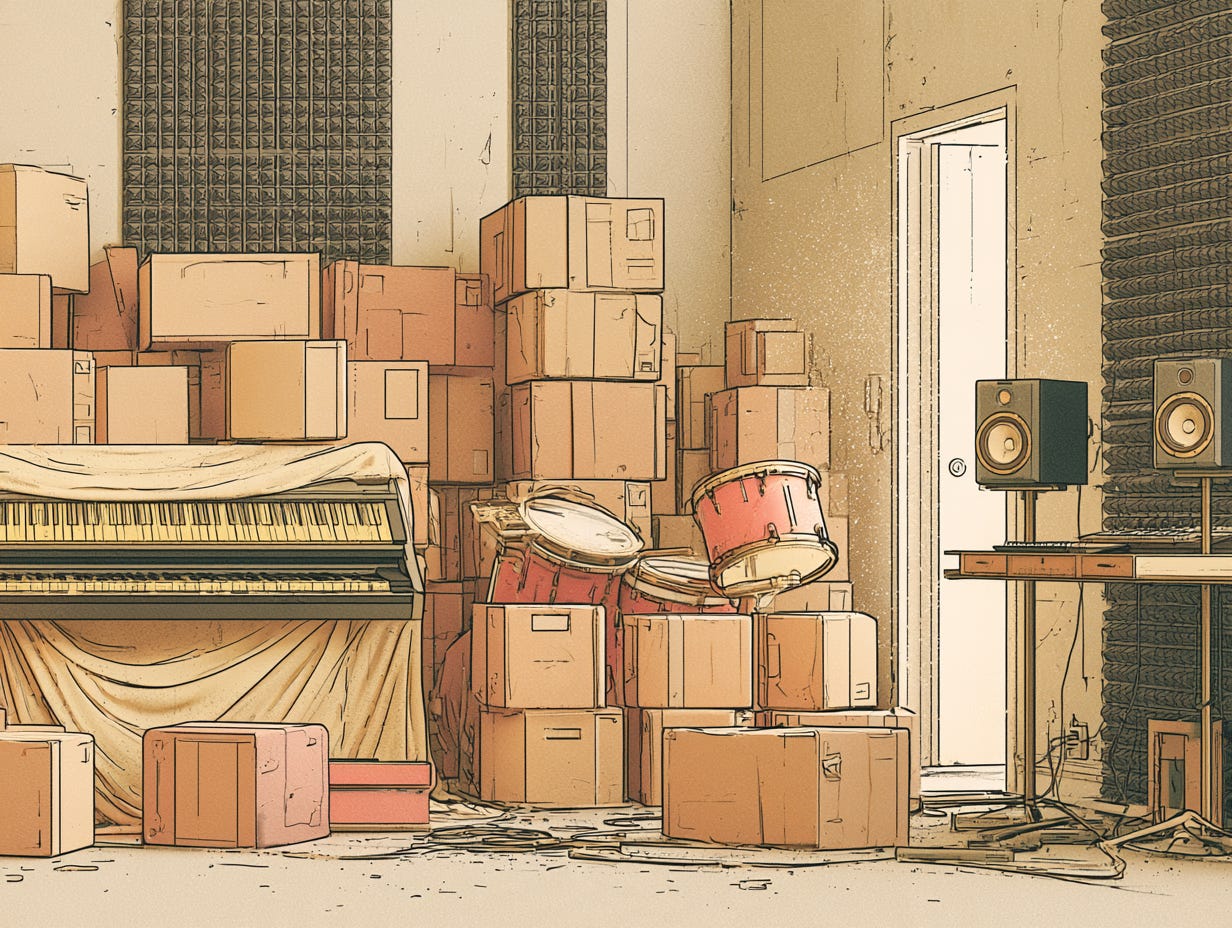
Last switched on: I do not know. Condition: I do not know. I open the room to put things in it. Nothing comes out. It will be dust by now, and some of it will not work; a dank room does that in a few years, and I have not been in to check which.
Every month a royalty payment arrives. It is pocket money. It is the only line in the inventory with a plus sign.
Before any of that there was a room and a groove. I would sit and play until something locked, and the tune would arrange itself around the lock, and my head would move without being asked. That is the case for music and I am not going to make it any longer than that.
The sentence found me before I left school, and I believed it enough to enrol at the conservatorium. I did not last a semester. I did a sum: a living made from this would not be a good living. So I fell into IT, meaning to keep the music on the side, and the side is where the quote above went, and the Zendrum, and the merchandise, and twenty years.
People said I was really good. They said it at school and at expos and in the chat while I streamed the making of it on Twitch, hours at a time in front of a webcam. I wrote instrumental music, fusing genres and styles into a rhythmic amalgamation. After every release I watched the numbers. The numbers were small and the compliments were not, and nothing I did closed the gap between them.
So I did what the sentence asks, which is to write for the buyer. If one set sold better than another I wrote more of that kind. If something did not sell I wrote less of it. The target moved each time I got near it. The groove became a puzzle: which things, in what order, would make a stranger pay. Enough people said good. Not enough of them paid.
The room went before the music did. By 2023 the last pieces were not made in it at all. They were made elsewhere in the house, on a small laptop, with headphones, in the evenings after work. The gear had been storage for a while by then. Nobody announced it.
The last thing I finished was a set of demos for a music software company. They sell soundbanks, the kind that fill the drives in the room, and when they launch a new one they choose a few demo tracks to launch it with. Being chosen is the sale. I was not chasing listeners any more. I was chasing a tracklist.
I submitted the demos in 2023 and went on holiday. The job paid for the holiday. In the downtime of the first few days I checked the page a few times. Nothing went up. Then the tracklist went up, and my track was not on it. Again.
I had done this sum once before, in my first semester, and left. It took twenty years and a bank loan to check it, and it was still right. What had changed was the other column. The work I had fallen into had stopped being a job at some point I never marked and become a career. I had expertise in things. People sought my opinion. I was somebody. The music had promised that since school and paid out pocket money; the day job had delivered it without being asked, with a salary attached, and it was paying for the place I was checking the tracklist from. Not worth the output. I came home and did not go back in.
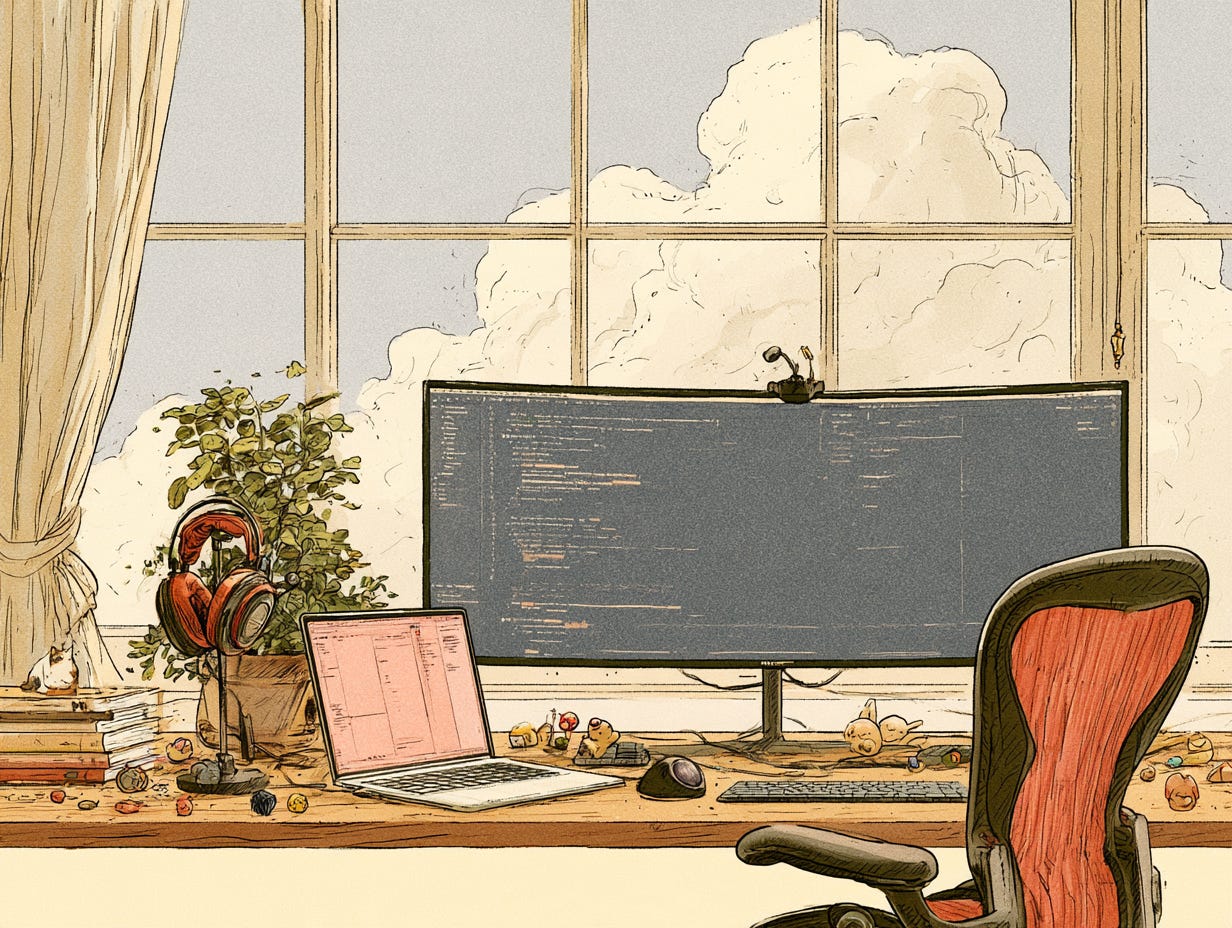
The other room has a desk too. On it: a MacBook Pro, supplied by work. A 34-inch curved monitor. A webcam. A trackball. Headphones, and a lapel mic. A keyboard. A chair. A deskful of fidget tools. The expensive item on it was not bought on a loan. It was issued.
I got into incident management because a company needed an incident coordinator and the pay was better than where I had come from, and it was shift work, which meant extra days off. I did not know what an incident coordinator was. What wasn’t to like. That is the origin story. There is no groove in it.
Twenty years later the work was a senior process role at Atlassian, and it was paying for holidays. In March 2026 the role was made redundant. There was time, then, and no employer, and the door to the first room stayed shut. I did not open it once. I doubled down on the other room instead, and what I built there was a newsletter about the job.
I built it for exposure. That goes on the record, because it is the motive that emptied the other room. I was tired of building mountains and leaving them with previous employers, and I wanted the world to see what I could do. The first piece was meant to be Hunter S Thompson at full froth, a railing against the machine, something to take people by the shoulders and shake them. Same pressure. Same motive.
It went the other way.
The reason is in the ledger. Zero Sev Zero earns nothing. Nobody has bought an essay. It has earned me a seat at tables I would not otherwise be at, and respect before the meeting starts, and the rest of the money comes from twenty years of sitting in incidents. The essays are the shop window. The stock is out the back.
And because nobody is asked to buy an essay, an essay is allowed to be wrong. It is where I test theories in public and lose, and go down the rabbit hole afterwards, and that is how I found the people who had been down it before me and left better notes. I did not read my way into the field. I wrote my way in, and the reading came after, refined and ready. Nobody pays for that part either.
I do watch the open rates. I know which kind of piece opens better. I have not yet written less of the other kind.
The gear has no room in the new house. I do not know how to feel about that. That is how it is.
I rarely listen to music now.
I have never said the sentence to anyone. I know what it asks for. If you have shown me something you made and I said only that I liked it, that was the whole of the compliment, and I left it there on purpose.